Author Archives: Admin

United States 2003 National Adult Literacy Survey released

Category : Uncategorized

Sunday, December 25, 2005

Preliminary results from the National Assessment of Adult Literacy (NAAL), released 15 December 2005 by the US National Center for Education Statistics, indicate gains and losses in literacy among minority adults between 1992 and 2003.

The nationally representative study among US adults age 16 and older found the over-all average prose and document literacy remained relatively unchanged, but quantitative literacy improved 8 points (on a scale of 500.) Results among minorities were mixed, with White and Asian/Pacific Islander minorities scoring significantly higher than Hispanic or Black ethnicities; Hispanic subjects in particular had sharp decreases in prose and document literacy (-9% and -8%, respectively) and quantitative illiteracy remained unchanged with 50% of subjects scoring at less than basic literacy levels.

The National Assessment of Adult Literacy is the most comprehensive measure of adult literacy in the USA. The 2003 NAAL, with 19 000 participants, was conducted by the Educational Testing Service, a non-governmental organization which charges for its services.

Retrieved from “https://en.wikinews.org/w/index.php?title=United_States_2003_National_Adult_Literacy_Survey_released&oldid=2145864”

European airspace closed by volcanic ash

Category : Uncategorized

Thursday, April 15, 2010

Hundreds of thousands of air travelers had their travel plans disrupted in Europe by volcanic ash from the Eyjafjallajökull eruption.

Tens of thousands of air travelers were stranded when all flights into and out of the United Kingdom were grounded, as it became one of the first nations to be affected. The grounding was even more extensive than that following the September 11 attacks of 2001 when only trans-Atlantic flights were canceled.

Eurocontrol released a statement saying “…most air traffic in the United Kingdom, Ireland, Denmark, Norway and Sweden is suspended.”

The grounding is because the volcanic ash drawn into the jet stream is of a particle size which allows it to remain aloft in the atmosphere. Ingestion of this foreign matter, because of its distribution, would lead to flame outs in all aircraft engines. The composition of the ash also means that it would first melt into glass if it were to enter the engine of an aircraft before solidifying again as it cooled. This could lead to damage to the compressors and fan blades, which would make it impossible to restart the engines, even if the aircraft were to exit the cloud.

The current contingency is informed by the experience of British Airways Flight 9, which on June 24, 1982 suffered just such complete engine flame outs when it flew through the plume of Mount Galunggung in Indonesia. In that case, the flight crew after many efforts was able to restart the engines, though one failed shortly after, and the aircraft landed without casualties.

The UK National Air Traffic Services (NATS) has stated that “restrictions will remain in place in UK controlled airspace until 1300 (UK time) tomorrow, Friday 16 April, at the earliest,” and that “We will review further Met Office information and at 0230 (UK time) tomorrow we will advise the arrangements that will be in place through to 1800 (UK time) tomorrow.” The NATS statement concluded “…the situation cannot be said to be improving”.

In addition to Northern Europe, the ash is drifting south; Berlin and Hamburg airports in Germany are closed, and airports in the Netherlands, Belgium and Northern France are described as now being closed or closing. Some flights from Spain and Portugal, together with upwards of 4,000 flights across Northern Europe, have been affected, and the knock-on effect of aircraft and crews out of position could disrupt air travel worldwide for up to 72 hours.

One affected group are British musicians booked to play at this weekend’s Coachella Festival in California. Amongst those stranded are Frightened Rabbit, Gary Numan, The Cribs and Bad Lieutenant.

Retrieved from “https://en.wikinews.org/w/index.php?title=European_airspace_closed_by_volcanic_ash&oldid=4510464”

Preventing Hard Water With Water Softeners In Ocala Fl

Category : Hydraulic Equipment

byAlma Abell

Many homeowners often complain about hard water and what it does to their drains and bodies. In order to combat the effects of hard water a number of homeowners use Water Softeners in Ocala FL. Water softener beads are used to help soften water so that it’s much less harsh on plumbing systems and you.

How can water be labeled as “hard?” The term hard is simply referring to the minerals contained inside of the water. Before water enters your home it goes through an extensive filtration process to get rid of bacteria and other dangerous elements. Part of this filtration process calls for minerals like calcium and magnesium to be added into the water. The amount of minerals added into a water system varies from city to city; however, the more these minerals are present the ‘harder’ the water becomes.

Why is hard water a bad thing? Calcium and magnesium are made up of positively charged ions. Although hard water is absolutely healthy to drink the minerals that are added have an effect on other positively charged ions in the water. Calcium and magnesium can also build-up inside of your pipes and can make it difficult for soap to dissolve. This is why water softeners in Ocala FL are used by many homeowners.

Water softeners are units that can be installed in order to decrease the amount of calcium and magnesium inside of water. The units are equipped with ions that work to remove some of the positively charged ions throughout your water before it enters your home. The ions used essentially latch on to as many positive ions as possible, and these positive ions stay within the unit. Each unit has a limit on how many ions it can hold before becoming ineffective.

Contact EcoWater Systems if you’re dealing with hard water inside of your home. Again, hard water isn’t detrimental to your health but it’s not a good thing for your pipes. The minerals in hard water can clog your pipes and can be harsh on your skin. Use softener units in order to remove the excess minerals included in hard water. Softer water is better for your pipes and is gentler on your skin.


Tanker explodes on I-75 north of Detroit

Category : Uncategorized

Thursday, July 16, 2009

A tanker explosion on Interstate 75 has destroyed a part of the Nine Mile Road overpass in Hazel Park, Michigan, a northern suburb of Detroit. One man, truck driver Ronald Martinez, has been killed and only 4 injuries have been reported.

On July 15, 2009 at about 8:15 PM EST, a tanker carrying thousands of gallons of gasoline collided with a semi-truck from Meijer grocery stores, causing an explosion that resulted in heavy black smoke that could be seen for miles.

It is believed that the tanker was clipped from behind by driver Saied Haidarian-Shahri, 27, of nearby Clawson. The tanker’s two parts broke in half when a semi-truck rammed into the gasoline-filled tanker and it exploded. The driver of the semi-truck sustained only minor injuries.

Saied Haidarian-Shahri was a relatively new driver, getting his license within the past 6 months. Reports say he was doing 70 mph in a 50 mph zone, called the “9 Mile Curve”, along the Chrysler Freeway. There were no traffic violations on his license. He has been blamed for causing the accident.

The explosion resulted in the collapse of the Nine Mile Road overpass over the freeway. The Michigan Department of Transportation (MDOT) has decided that the rest of the overpass cannot be saved.

MDOT has closed down the freeway between Interstate 696 and Eight Mile Road both northbound and southbound. Local streets surrounding the site have been closed too. This is expected to cause trouble for commuters who travel one of the most used freeways in the metro area.

About 2,000 residents of Hazel Park are now without power due to the accident.

Retrieved from “https://en.wikinews.org/w/index.php?title=Tanker_explodes_on_I-75_north_of_Detroit&oldid=4638920”

On the campaign trail in the USA, May 2020

Category : Uncategorized

Friday, June 19, 2020

The following is the first edition of a monthly series chronicling the 2020 United States presidential election. It features original material compiled throughout the previous month after an overview of the month’s biggest stories.

This month’s spotlight on the campaign trail includes interviews with the vice presidential nominees of the Constitution and Libertarian parties as well as the chosen running mate of the leading Green Party presidential candidate.

Retrieved from “https://en.wikinews.org/w/index.php?title=On_the_campaign_trail_in_the_USA,_May_2020&oldid=4650219”

Sculpting Your Nose With Rhinoplasty

Sculpting Your Nose with Rhinoplasty

by

David Chandler

Rhinoplasty is surgery on the nose. The procedure can be done for medical reasons, breathing problems, birth defects, or injury, or it may simply be done for aesthetic cosmetic purposes.

Rhinoplasty Procedures

There are two types of rhinoplasty procedures. The first type is known as an open procedure. With an open procedure, a minor incision is made between the nostrils, enabling them to lift that portion of nasal skin off the nose for better visibility of the cartilage and bone. This procedure gives the surgeon more control over the patient’s nose because they are able to see the bone and cartilage. An open rhniplasty will leave a scar; however, for a skilled surgeon the scar will not be visible from a standard viewing distance.

The other type is closed rhinoplasty, where incisions are made on the inside of the nose, thus concealing any evidence of surgery. However, in some cases your surgeon may not be able to get to the target areas in order to perform the surgery sufficiently.

There are advantages and disadvantages of either type of rhinoplasty surgery. Therefore, it is necessary to consult with your surgeon to determine which type would be best suited for your situation.

Finding the Right Surgeon

[youtube]http://www.youtube.com/watch?v=vIEnsFvuAS8[/youtube]

Although nose shaping has been around for many decades, it does require incredible ability by the surgeon. Your doctor should have the proper certification and experience necessary to perform the given procedure.

Interview at least two or three plastic surgeons, he, or she should be board certified, and have a minimum of 5 years experience. During the consultation, ask how many rhinoplasties they have done in the last year, consider how well the doctor listen to your ideas, ask to see examples of their work and what can they do for you.

Likewise, if you are going to have general anesthesia, be sure the American Board of Anesthesiology has certified your anesthesiologist. In addition, make sure that you can be rapidly admitted to a nearby quality hospital in the event of unforeseen complications.

Rhinoplasty Fees

Surgeons fee: $3,500

Anesthesiologist: $700

Facility fee: $800

Average Total Cost: $5,000

Rhinoplasty is usually not covered by insurance unless the procedure is performed for medical reasons, e.g. birth defect, or accident. Therefore, you should consult the surgeon’s office about payment plans or seek out a finance company that specializes in medical loans. If your insurer says that it is covered, be sure to get pre-authorization from them before the operation.

Complications

If you are careful and selective about whom you choose for your surgeon, anesthesiologist, and of course operating facility, there is only a less than 5% chance of any complications.

However, a possible risk you will need to consider and accept before having cosmetic nose surgery is revision rhinoplasty. First, because nose surgery is a difficult procedure and secondly, following the surgery your nose can change in ways which cannot be predicted beforehand. It is recommended to wait at least one year if a revision rhinoplasty is needed.

Recovery

A splint is applied to the top of the nose to keep it in place while healing and gauze packing is inserted for a couple of days to protect the septum from moving and minimizing bleeding. The splint is usually removed within a week.

Anti-inflammatory medication and a painkiller are prescribed for swelling and discomfort, as well as an antibiotic to prevent infection. You should also apply ice, elevate the head, and avoid blowing your nose and wearing eyeglasses.

Finally, few people ever regret getting a nose job. It has the potential to create a new appearance and lend new confidence. Just be careful

For more information about rhinoplasty, click here

Rhinoplasty

Article Source:

ArticleRich.com


Culture of creativity features at Furnal Equinox 2018

Category : Uncategorized

Sunday, March 25, 2018

Visual art, fabric art, photography, performance, dance, virtual reality, and music were all the subject of sessions at Furnal Equinox 2018, a conference held from March 16 to 18 at Toronto’s Westin Harbour Castle. Canada’s largest furry convention by attendance, the annual event offers dozens of subculture-specific programs.

The convention’s communications and public relations coordinator for the event, Ronnie, describes furries as “people that enjoy arts and culture centred around animals and animal-themed topics, essentially. Furnal Equinox in particular, we like to celebrate in a very visual and very […] artistic nature, where we have lots of arts and performances and crafts that go on, and people celebrate with lots of socialisation involved.”

Of the attendees, Ronnie told Wikinews “they come from all walks of life. They are people of all ages, sizes, all sorts of backgrounds, and they come together under one mutual interest, which is their love for animal culture.”

“Programming at Furnal Equinox involves[…] a lot of informational panels, so you can find out about topics from art and how to draw, or how to visually incorporate different elements into your artworks. You can also find panels that teach you how to write better, be a better fiction author for example,” explained the event representative.

At one panel Wikinews attended, members of its all-volunteer organising committee spoke of the year-long process of planning the event, and their reasons for committing such a significant amount of their time. Said one panelist, “if you’re happy, we’re happy.”

The largest hub of activity at the convention was a dealer’s room; nicknamed the “Dealer’s Den”, giving it an anthropomorphic twist. Vendors were selling original visual art, wearables like faux fur tails or ears, or things like jewellery or soap with motifs that would interest attendees.

The back area of the room was dedicated to a charity auction, with proceeds benefiting Happily Ever Esther Farm Sanctuary. According to the convention website, the charity is “dedicated to rescuing abused, neglected, and abandoned farmed animals. Their goal is to provide a safe, life-long home for all of their residents, and to educate the public about the true nature of farmed animals through tours, volunteer programs, and community outreach.”

Split into groups, some attendees played “Fursuit Games” in front of an audience, like trying to toss a ball into a garbage can. The activity made harder, of course, by the limited dexterity and vision the most of the costumes entail.

Retrieved from “https://en.wikinews.org/w/index.php?title=Culture_of_creativity_features_at_Furnal_Equinox_2018&oldid=4564837”

Haiti rescue efforts continue, but survivors face increasing insecurity

Category : Uncategorized

Friday, January 29, 2010

The survivors from the recent 7.0 magnitude earthquake in Haiti are now facing increasing insecurity from human traffickers and convicts escaped from collapsed prisons, officials have cautioned, even as aid is flowing into the country. The acting head of the UN’s Haitian mission, meanwhile, says that that full reconstruction could take several decades. As many as 200,000 people were killed by the tremors, which struck on January 12, and 1.5 million people have been left without homes.

Anthony Banbury, the deputy head of the UN mission in the earthquake-ravaged country, commented to the Agence France-Presse (AFP) news agency that survivors queuing for aid sometimes turned violent. He commented that while the aid is vital for the country, “it can be a source of insecurity because it attracts big crowds and there can be disorder around food distribution.”

“[It is] absolutely necessary that we get enough food, enough water, enough shelter for the people, and enough security. I don’t think any of us are anywhere near being close to being satisfied, because so much more needs to be done,” he added. “[We must] do things smart, as well as fast, and that’s a big challenge for us now.”

The Haitian national police chief, Mario Andresol, remarked that electricity blackouts resulted in “bandits […] taking advantage to harass and rape women and young girls under the tents,” adding that 7,000 inmates of prisons escaped after the quake. “It took us five years to apprehend them. Today they are running wild.”

Further exacerbating the security situation was that the Haitian police force was largely crippled by the disaster, with hundreds of policemen either killed or missing.

“At night, people take things. But I don’t have a problem. I don’t have anything to steal.” said one local resident, Omen Cola, to AFP.

At night, people take things. But I don’t have a problem. I don’t have anything to steal.

Child trafficking, meanwhile, is also an issue; it had been a chronic problem even before the earthquake. The Red Cross has started to register orphaned children, and temporarily sending some to orphanages for shelter, according to a senior advisor for the United Nations Children’s Fund (UNICEF), Bo Viktor Nylund.

UNICEF press official Roshan Khadivi told the Xinhua news agency on Wednesday that “we are taking photos and filling in forms to get the children’s full details on file. Experience has shown us that there is at least one family member left usually. UNICEF does not believe in institutionalization in orphanages. Children need to be connected with their communities.” Khadivi noted that considering adoption would only be done if the child’s parents are not found after several months.

Sixty orphaned children, meanwhile, were transported earlier by plane to Germany, where they are to be adopted; six of them were hospitalised for fatigue and dehydration.

Edmond Mulet, the acting head of the UN mission for Haiti, told the BBC that it could take decades to fully reconstruct the country, and any recent development had been negated by the quake. “I think this is going to take many more decades than only ten years, and this is an enormous backwards step in Haiti’s development. We will not have to start from zero but from below zero,” he said.

[…] This is an enormous backwards step in Haiti’s development. We will not have to start from zero but from below zero.

Mulet, who is also the UN’s assistant peacekeeping operations secretary-general, said that the aid logistics were a “nightmare”. However, he said he believed the capacity to provide help was improving, saying: “All this is coming together right now. Every day you can see more and more Haitian national police on the ground, working with our troops and more and more water being distributed, so it’s a matter of time and putting all these elements together,” as quoted by the BBC.

According to the head, 200,000 heavy-duty tents had been ordered, to help people cope with the rainy season, which generally starts in May. “Of course, 200,000 family-sized tents – solid ones that can withstand a hurricane season – are not available in the market just like that, so they have to be made. It’s going to take a few days and weeks before they can arrive, but all this is coming,” Mulet noted.

The Haitian president, Rene Preval, earlier this week asked for 200,000 tents and 26 million ready-to-eat meals to be airdropped.

Lieutenant Colonel Bruce Ewing, commander of Canada’s Disaster Assistance Response Team, meanwhile, was concerned whether there was enough management in relief operations. “Everyone is trying to help, but it’s not as coordinated as it should be. We’re not getting aid to where it needs to go as effectively as it should be,” he told AFP.

Earlier this week, Haitian Prime Minister Jean-Max Bellerive, described the reconstruction process as being a “colossal work of reconstruction.”

“In 30 seconds, we lost nearly 60 percent of our gross domestic product, because all of Haiti’s resources were concentrated in a small area around our seat of government,” he said. “We have to decentralise. It’s the only way to be efficient. It’s also the only way to avoid the same problems happening in Haiti again.”

The UN, meanwhile, reports that international funding and aid pledges for the country have now surpassed US$2 billion worth.

Retrieved from “https://en.wikinews.org/w/index.php?title=Haiti_rescue_efforts_continue,_but_survivors_face_increasing_insecurity&oldid=3130941”

Not On My Time Buddy

Category : Vehicle Tracking

By Simon King

Michael was a business owner who had started out small, and fought tooth and nail to get a large enough empire to finally be able to get other people to work for him, rather than the other way around. He was successful, but had never let his success get to him to the point where he forgot the importance of the mighty dollar, and how every penny counted.

It was because Michael was so thrifty with his expenses, and tracking of his outgoing money that had got him where he was today, a very successful business man who intended to get bigger.

His company was based around specialized consulting services, which required a company vehicle to make calls to clients businesses, or residences and assist with computer based difficulties. While he had chosen his employees carefully for their skills, there was no real way of telling how long a job would take once they were with a client.

[youtube]http://www.youtube.com/watch?v=y6mtAbV_3Aw[/youtube]

Not knowing the whereabouts of his employees at any given time or the amount of time that was spent with a particular client concerned Michael, as he paid his employees a set weekly wage for their services.

One particular employee, who was very skilled, but somewhat of a bad boy worried Michael quite a lot. So he decided to place a GPS tracking stick in each of his employees cars to check on their movements, how long they were with a client, and if they were up to no good. It was simple to install the inconspicuous tracking stick in the company cars. They were small and fit in well enough not to be noticed by the employees.

After the first day, Michael closed the doors of the business, bid farewell to his employees for the day, and set out to remove the tracking sticks to find out what his employees had been up to for the day. What he found was astonishing. His employees were making stops at shopping centers for hours at a time, going to their homes, and visiting strange addresses that weren t on his list of clients.

Michael calculated the cost of these ‘expenses’ on his business, including the extra distance that was traveled in company cars, as well as the wages he was paying out for employee’s that were not actually working, the cost was most definitely worth doing something about.

The next day, Michael called a staff meeting, and produced the results for his employees to see for themselves, and threatened that next time they were caught using company resources to follow their own pursuits, they would have their pay docked, and face dismissal.

After the incident, the company’s profit margins have seen a large increase, and Michael has placed a sticker on each of the cars visors that says “Not on my time, buddy” as a warning. The tracking sticks remain in the cars, and are monitored each day. If it wasn t for the GPS Tracking stick, Michael might never have known what his employees were up to. It was the best investment he had ever made for his company.

About the Author: Born 1961 in Liverpool of Greek parents. Moved to the USA when he was 13 years old. Went straight into banking after leaving school and progressed up to branch manager before leaving. A keen basketball fan and gardener.

thespyshop.ws

Source:

isnare.com

Permanent Link:

isnare.com/?aid=138508&ca=Advice


Asbestos controversy aboard Scientology ship Freewinds

Category : Uncategorized

Friday, May 16, 2008

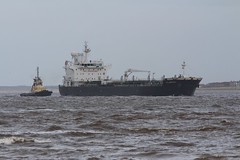
Controversy has arisen over the reported presence of blue asbestos on the MV Freewinds, a cruise ship owned by the Church of Scientology. According to the Saint Martin newspaper The Daily Herald and the shipping news journal Lloyd’s List, the Freewinds was sealed in April and local public health officials on the Caribbean island of Curaçao where the ship is docked began an investigation into the presence of asbestos dust on the ship. Former Scientologist Lawrence Woodcraft supervised work on the ship in 1987, and attested to the presence of blue asbestos on the Freewinds in an affidavit posted to the Internet in 2001. Woodcraft, a licensed architect by profession, gave a statement to Wikinews and commented on the recent events.

According to The Daily Herald, the Freewinds was in the process of being renovated by the Curaçao Drydock Company. The article states that samples taken from paneling in the ship were sent to the Netherlands, where an analysis revealed that they “contained significant levels of blue asbestos”. An employee of the Curaçao Drydock Company told Radar Online in an April 30 article that the Freewinds has been docked and sealed, and confirmed that an article about asbestos ran in the local paper.

Lloyd’s List reported that work on the interior of the Freewinds was suspended on April 27 after health inspectors found traces of blue asbestos on the ship. According to Lloyd’s List, Frank Esser, Curaçao Drydock Company’s interim director, joined Curaçao’s head of the department of labor affairs Christiene van der Biezen along with the head of the local health department Tico Ras and two inspectors in an April 25 inspection of the ship. “We are sending someone so that they can tell us what happened, where it came from, since when it has been there,” said Panama Maritime Authority’s director of merchant marine Alfonso Castillero in a statement to Lloyd’s List.

The Church of Scientology purchased the ship, then known as the Bohème, in 1987, through an organization called Flag Ship Trust. After being renovated and refitted, it was put into service in June 1988. The ship is used by the Church of Scientology for advanced Scientology training in “Operating Thetan” levels, as well as for spiritual retreats for its members. Curaçao has been the ship’s homeport since it was purchased by the Church of Scientology.

According to his 2001 statement, Lawrence Woodcraft had been an architect in London, England since 1975, and joined Scientology’s elite “Sea Organization” (Sea Org) in 1986. He wrote that he was asked by the Sea Org to work on the Freewinds in 1987, and during his work on the ship “noticed a powdery blue fibrous substance approximately 1 ½” thick between the paint and the steel wall,” which he believed to be asbestos. He also discovered what he thought was blue asbestos in other parts of the ship, and reported his findings to Church of Scientology executives. Woodcraft discussed his experiences in a 2001 interview published online by the Lisa McPherson Trust, a now-defunct organization which was critical of the Church of Scientology.

The Freewinds regularly inspects the air quality on board and always meets or exceeds US standards.

Church of Scientology spokeswoman Karin Pouw responded to Radar Online about the asbestos reports, in an email published in an article in Radar on May 1. “The Freewinds regularly inspects the air quality on board and always meets or exceeds US standards,” said Pouw. She stated that two inspections performed in April “confirmed that the air quality is safe,” and asserted that the inspections revealed the Freewinds satisfies standards set by the United States Occupational Safety and Health Administration and the U.S. Clean Air Act.

Pouw told Radar that “The Freewinds will be completing its refit on schedule.” The Church of Scientology-affiliated organization Citizens Commission on Human Rights (CCHR) had been planning a cruise aboard the Freewinds scheduled for May 8, but according to Radar an individual who called the booking number for the cruise received a message that the cruise had been delayed due to ongoing work on the ship. Citing an article in the Netherlands Antilles newspaper Amigoe, Radar reported on May 6 that a team from the United States and supervised by an independent bureau from the Netherlands traveled to Curaçao in order to remove asbestos from the Freewinds.

…if the Church of Scientology claims to have removed the blue asbestos, I just don’t see how, it’s everywhere. You would first have to remove all the pipes, plumbing, a/c ducts, electrical wiring etc. etc. just a maze of stuff.

“I stand by everything I wrote in my 2001 affidavit,” said Lawrence Woodcraft in an exclusive statement given to Wikinews. Woodcraft went on to state: “I would also comment that if the Church of Scientology claims to have removed the blue asbestos, I just don’t see how, it’s everywhere. You would first have to remove all the pipes, plumbing, a/c ducts, electrical wiring etc. etc. just a maze of stuff. Also panelling as well, basically strip the ship back to a steel hull. Also blue asbestos is sprayed onto the outer walls and then covered in paint. It’s in every nook and cranny.”

Many Scientologist celebrities have spent time aboard the Freewinds, including Tom Cruise, Katie Holmes, John Travolta, Kelly Preston, Chick Corea, Lisa Marie Presley, Catherine Bell, Kate Ceberano, and Juliette Lewis. Now magazine reported that Tom Cruise has been urged to seek medical attention regarding potential asbestos exposure, however a representative for Cruise stated he has “absolutely no knowledge” of the recent asbestos controversy. Cruise, Holmes, Travolta and Preston have celebrated birthdays and other events on the Freewinds.

There is not now and never has been a situation of asbestos exposure on the Freewinds.

In a May 15 statement to the United Kingdom daily newspaper Metro, a representative for the Church of Scientology said that “There is not now and never has been a situation of asbestos exposure on the Freewinds.” The Asbestos and Mesothelioma Center notes that agencies have recommended anyone who has spent time on the Freewinds consult with their physician to determine if possible asbestos exposure may have affected their health.

Raw blue asbestos is the most hazardous form of asbestos, and has been banned in the United Kingdom since 1970. Blue asbestos fibers are very narrow and thus easily inhaled, and are a major cause of mesothelioma. Mesothelioma is a form of cancer which can develop in the lining of the lungs and chest cavity, the lining of the abdominal cavity, or the pericardium sac surrounding the heart. The cancer is incurable, and can manifest over 40 years after the initial exposure to asbestos.

“This is the most dangerous type of asbestos because the fibres are smaller than the white asbestos and can penetrate the lung more easily,” said toxicologist Dr. Chris Coggins in a statement published in OK! Magazine. Dr. Coggins went on to note that “Once diagnosed with mesothelioma, the victim has six months to a year to live. It gradually reduces lung function until the victim is no longer able to breathe and dies.”

Retrieved from “https://en.wikinews.org/w/index.php?title=Asbestos_controversy_aboard_Scientology_ship_Freewinds&oldid=4647051”